Monday, April 18, 2016

Like an Electric Worm in Your Brain: A Review of Zero Saints


This novel has everything you need. You knew it just from looking at the cover. You knew it from the title.

Yes, Zero Saints by Gabino Iglesias is one of those books.

Complex characters? Check. Dark magic realism? Check. Scathing commentaries on border politics and contemporary society? Check. Fully bilingual brutality and grit like you’ve never ever seen before? Check.

Ladies and gentlemen, this is the genesis of “barrio noir,” and you’re gonna want to get in on it.

Like now.

Zero Saints is the story of Fernando, a smalltime “enforcer and drug dealer” in Austin, Texas, who winds up eyeball-deep in shit after some real-deal Mara Salvatrucha gangsters decide that he and his associate Nestor are an inconvenience to their own retail endeavors.

Well, Nestor is cut up and fed to…something by the gang’s sociopathic leader. Fernando is left reeling, stuck between a rock and a hard place. He's forced to continue his dealings to get by, risking a fate similar to that of his friend. (He’s also got the hots for a fairly straitlaced neighbor-lady, which further complicates things.) Good options are a luxury that Fernando cannot afford. So, with the help of an ancient death saint, a handful of seedy business associates, a few dark mystics, and some expert-level prescription pain-pill abuse, he attempts to overcome the odds and save himself from a most grisly demise at the hands of the Salvatrucha.

Damn.

In addition to all this insanity, I really respect that Iglesias wasn’t afraid to get overtly political at times with this story. His commentaries are as rock-solid as the book’s narrative and gritty aesthetics. Zero Saints is a full-fledged literary punch to the gut. It's a fist of beautiful words clad in filthy, rusted brass knuckles.

In regard to the novel’s bilingual prose, some readers out there seem concerned. I admit that I'm biased on this matter. I’m fluent in both English and Spanish (I spent a few years doing activist journalism in Mexico and Central America). That said, I don’t think the book will pose any major problems to all you English-only readers. If anything, you’ll pick up some useful slang and profanity in Spanish. Just give it a shot, güey. 

I loved Zero Saints. Not only can I say that it's the best book I’ve read this year, it’s also been added to my list of Favorite Things.

Seriously.

Yes, whether Gabino Iglesias likes it or not, his novel now occupies a space in my mind alongside Videodrome, The Locust’s Plague Soundscapes, northern flying squirrels,  Hieronymous Bosch paintings, and pizza.

And if you don’t like that, Gabino, well, you’re just gonna have to hunt me down, saw me into pieces, and feed me to…something.

However, know that I too have a Russian friend.

Yeah, okay, I don't.

Here’s an excerpt from Zero Saints para ustedes.

For real though, just go buy the fuckin’ book. This shit’s gonna burrow into your brain like an electric worm.

I promise.

Thursday, April 7, 2016

Joke’s on You: A Review of Your Glass Head Against the Brick Parade of Now Whats


I almost didn’t buy this one because it's a work of poetry.

See, I’m a huge fan of Sam Pink’s prose. His novels Person and No Hellos Diet are among my all-time favorites. And his short stories, like “Two Things About Living in Romeoville, Illinois” and “Ryan Francis,” are works of violent, depressive genius.

His poetry, however, has often left me disappointed.

Don’t get me wrong, when it’s good, it’s really fucking good. “Apartment” and “I Always Think, ‘If I Just Get a Good Amount of Sleep I’ll Be Fine'” come right to mind as poetic high-water marks for Pink. That said, his book of collected poems is some 450 pages-long. As I look over my copy, I see that I’ve dog-eared maybe 15 of those pages. Much of it reads like a boring, melodramatic diary. 


Now,
Your Glass Head Against The Brick Parade of Now Whats is perhaps
 something of a turning point in Pink’s poetry. It’s 70 pages long, and every single fucking word is worth your time.

I promise.

Sam Pink describes Your Glass Head as a single “beautiful nice poem,” which seems fitting enough, I guess. But I’d add that it’s also a catalog of depressing aphorisms, grim metaphors for modern living, and bleak, fragmentary observations—all completely relevant to real people in today’s world. It’ll strike a chord for sure. No narrative frills. Just raw, unmitigated negativity, depression, and self-loathing. It's a perfect distillation of Sam Pink’s oeuvre, calcified and sharpened to a glistening point for slow insertion into one of the more membranous parts of your body.

Your Glass Head is full of wisdom for today’s world.

“Every waking moment, forced forward by invisible bayonets.”

“Life like the only reality is waking up every couple of days for ten seconds in the seat of a car that’s skidding off a snowy road.”


Yet, it also has tragic absurdity and black humor.

“Yearly Christmas card that reads, ‘Still haven’t killed myself, Merry Christmas.'”

“That thing where you go to shake someone’s hand but pull it away to slick back your hair except instead of that you reach into your pants and pull out a gun and shoot yourself.”


And it even offers some righteous, anti-authoritarian anger as well.

“Spitting at the firing squad.”

Truly something for everyone.

Well, everyone who has the courage to look into the mirror each day and actively hate what they see. Everyone who has the strength to look at our world and acknowledge how utterly stupid and suffocating it is. If you're one of those people, this poem will sing a song to your soul. It is a masterwork of depression and abject alienation. It is epic. It is Sam Pink's "Howl."

But here’s the thing. Increasingly, when I read Sam Pink’s works, in spite of his seething self-loathing, I can’t help but feel that the joke, ultimately, is on me—on his readers.

See, Sam Pink is a reasonably successful and respected author. He’s published several books that seem to resonate with people. He can sleep easy knowing his ideas—and his life—have meant something to other human beings. If you’re anything like me, you’re still struggling to publish your work. You're full of bad ideas. You’re broke and on-track to be forgotten, immediately, upon the moment of your death. You’ve had no significant impact on the lives of others, and you probably never will. You are nothing. Sam Pink, though, is something.

So the joke is on you, my friend.

The joke is on me.  

Sam Pink is “Depresso-O the Magnificent,” and I love him for it. Go get a copy of Your Glass Head Against The Brick Parade of Now Whats. Read it and contemplate what a directionless mess your life is, you pathetic piece of shit.


Tuesday, March 22, 2016

Like Looking Into a Mirror: A Review of Marigold


Hey, you’re a fairly decent person stuck working a shit job but doing your goddamndest to eke out a life worth living. However, you find, more often than not, that existence under modern capitalism feels suffocating, crushing. Other people are difficult to relate to and largely incomprehensible. Your worklife ranges from denigrating to soul-rending. Bills pile up in spite of your spartan lifestyle. You take on a second job, maybe a third. You watch Seinfeld reruns with a homeless person. You routinely contemplate suicide. Well, Marigold by Troy James Weaver is the novella for you. 

It’s maybe more a mirror than a book, so brace yourself.

Marigold is the story of a “thirty-something floral salesman” struggling to cope with the sheer horror of everyday life. For many, I’m sure, the story will be as relatable as it is bleak. It is intensely uncomfortable, absurd, and beautiful. It is emotionally devastating and full of existential dread. It is the absolute best of contemporary literary fiction.

Marigold is written as a series of short vignettes that range from a few lines to a few pages. This makes the novella an extremely easy read, despite the fragmentary nature of the narrative. Troy James Weaver, more than any author I can think of, accurately captures the rhythm of modern existence through his writing. Yet, at the same time, his prose tends to communicate a dreary, dreamlike quality, which in the past has led reviewers to compare his work (particularly, his novel Visions) to Harmony Korine’s films. I think the reference is warranted in regard to both Visions and Marigold. That said, for me, Marigold called to mind more the writings of Charles Bukowski and Sam Pink (there’s even a passing Bukowski reference early in the novella). But in my honest opinion, Troy James Weaver brings a level of seriousness to the table that neither Bukowski or Pink ever conveyed. Don’t get me wrong, I love Bukowski and Pink. Troy James Weaver, though, just seems to be doing something a little more true-to-life, a little more visceral.

If you’re a real person, you most certainly understand a few things. Our society is shit. Our economy is a massive human meat grinder. Most contemporary literary fiction is utterly insufferable.

Troy James Weaver’s Marigold, however, is exactly what the world needs right now. It is a bittersweet antidote to all that ails us in this miserable human moment. 


Tuesday, March 8, 2016

Dirtbag Stuff With Heart: A Review of Zero Lives Remaining


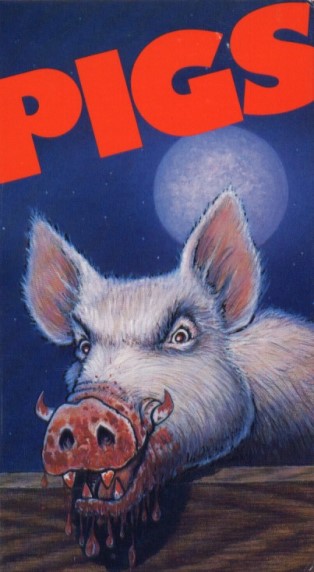
For those of us who lived through the 1980s, this cover makes a lot of promises. For me, personally, it evokes vivid memories of browsing the local video store with my dad and little sister, passing through the horror section, and marveling at the depraved artwork on the VHS cases. My sister and I regularly begged my dad to rent Ankle Biters, Critters 2, and Monkey Shines. We were completely obsessed with the movie Pigs, based solely on its revolting cover.

We caught Critters 2 on TV some years later. We agreed, it was fairly disappointing.

Unlike Critters 2 though, Zero Lives Remaining is not a disappointment. Scroll up, take a good look at the book’s cover again.


“Here,” the artwork seems to whisper. “Just like good old times at Front Row Video, I promise. Just like Pigs. Just like Critters 2. Only this—this is actually gonna deliver.”


And it does. Exceedingly.


Zero Lives Remaining is the story of Tiffany Park, a teenage video game virtuoso who spends much of her time at Funcave, an arcade-pizzeria, where she dominates games like Ms. Pac-Man and Street Fighter Alpha. Video games, pizza—sounds rad so far, right? Well, meet Chris Murphy, 
the story's antagonist. He's a dumpy teenage nü-metal fan with a crush on Tiffany. Chris clings to Tiffany like a lost, racist puppy, commenting incessantly on the fact that she is Asian, calling her names like “China Girl” even though he knows she is Korean. Chris Murphy is not rad. He is, in fact, a complete piece of shit. But just wait. Turns out Funcave is haunted by the ghost of Robby Asaro, a guy who accidentally cooked himself in the kitchen's pizza oven back in 1989. In 2014, living as a ghost inside Funcave's arcade games, Robby considers Tiffany as something of a daughter-figure in his life. 

Er, afterlife. 


Anyway, weird shit starts happening at Funcave as Robby’s ghost takes measures to protect Tiffany from an increasingly offensive and stalker-y Chris. Soon, Funcave is thrown into total chaos, and the book’s wider cast of characters—including the porn-addict owner of the arcade-pizzeria—finds itself in the thick of some ghastly mayhem. Expect lots of ghost slime.

Both hilarity and gore ensue.


Zero Lives Remaining is a quick and effortless read. The book’s author, Adam Cesare, writes in a style that is both lean and smooth. Not sure if it’s more an art or science, but Cesare’s got it down. My first exposure to the guy’s writing was the 2012 novel Tribesmen. One of the things I loved most about that book was the way that Cesare managed to subvert stereotypes with his characters and deliver some pretty solid social commentary through what was essentially a gore-filled cannibal-horror romp. And Zero Lives is no different on the subversion-and-commentary front. Cesare’s got a good thing going. His works are certainly classifiable as dirtbag stuff—but dirtbag stuff with intellect, loads of heart, and complexity. How he walks simultaneously among such disparate worlds, I haven’t a clue. But let's hope he keeps it up. 


Definitely check out Zero Lives Remaining. If you’re anything like me, it’ll have you at the cover. 


Monday, December 7, 2015